PRP for Atrophic Scars: How It Works, How Effective It Is, and Whether to Choose PRP or Laser
- 1What is PRP for atrophic scars?
- 2Does PRP work for atrophic scars?
- 3Should you choose PRP or laser for atrophic scars?
- 4What does the PRP scar treatment process involve?
- 5Who should and shouldn't have PRP for atrophic scars?
- 6How many sessions of PRP for atrophic scars, and how much does it cost?
- 7Why choose PRP for atrophic scars at Foxy M.D Da Nang?
- 8Conclusion
- 9Quick summary of this article
- 10Frequently asked questions

1 What is PRP for atrophic scars?
PRP is platelet-rich plasma, separated from your own blood with a centrifuge. When it is delivered into the scar area, the growth factors in the platelets stimulate the skin to repair tissue and boost collagen production, helping the base of the scars become shallower.
Platelets do more than help stop bleeding; they also contain many growth factors involved in wound healing, such as platelet-derived growth factor (PDGF), transforming growth factor (TGF-β) and vascular endothelial growth factor (VEGF). When concentrated and delivered into the dermis, these signals activate fibroblasts to make new collagen, improving the structure of the skin around the scars.
Because it uses your own blood, PRP carries a low risk of allergy. Even so, it is still a medical procedure involving needles and must be performed under sterile conditions. The centrifugation process and other uses of PRP are covered in the article PRP for skin rejuvenation and recovery.
2 Does PRP work for atrophic scars?
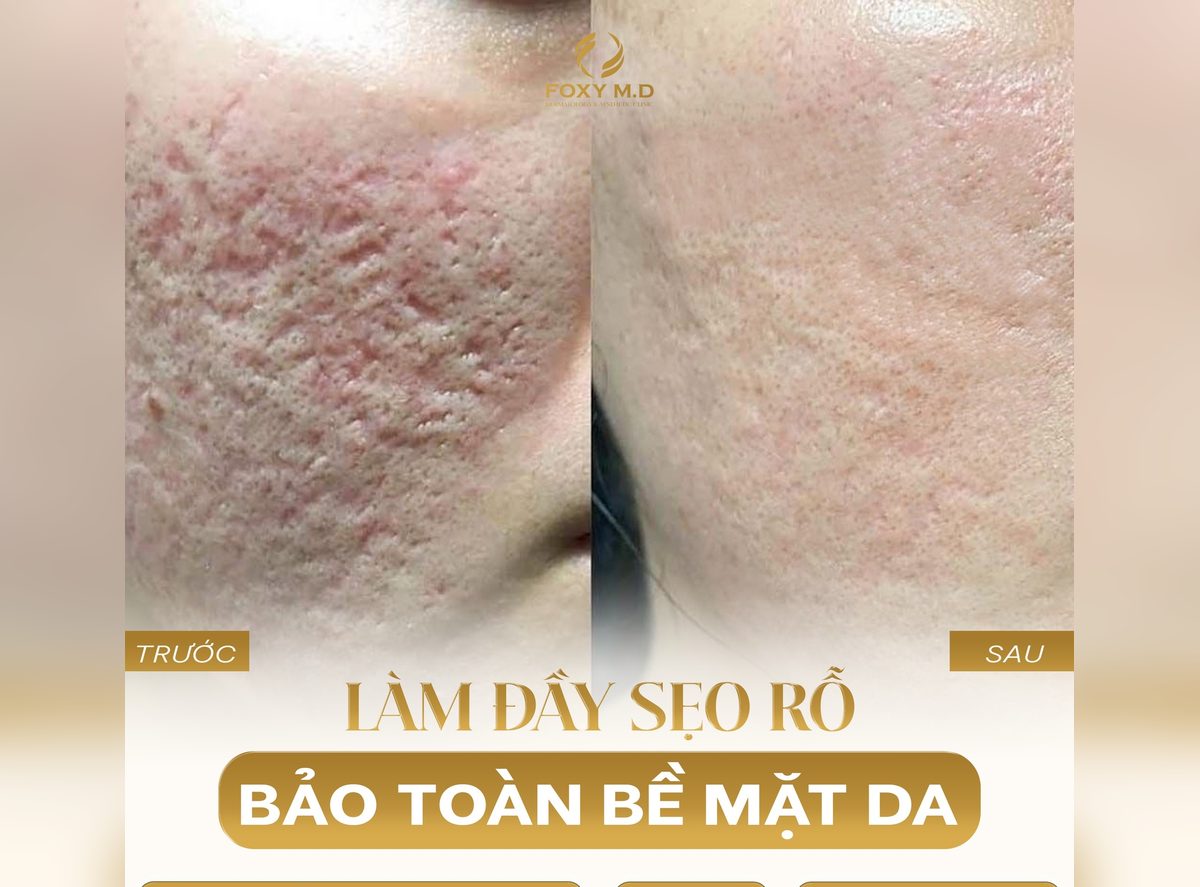
PRP can help improve shallow atrophic scars and speed up skin recovery, but it works most effectively when combined with microneedling, Fractional laser or subcision. PRP alone is usually not enough for deep scars.
In scar treatment, PRP usually plays the role of a booster. Techniques such as micro needling or Fractional laser create micro-injuries to stimulate the skin to regenerate; PRP delivered right afterwards provides extra growth factors, helping collagen formation go more smoothly and, for many people, shortening the redness and swelling after the procedure.
That is why, in the Premium scar treatment package at Foxy M.D, PRP is paired with Micro Needling in the same session. The degree of improvement depends on scar type, depth and constitution; deep ice-pick scars or scars tightly tethered by fibrous bands still need specialized techniques such as TCA Cross or subcision. If you are not sure whether a depression in your skin is a scar, see the article do atrophic scars go away on their own.
3 Should you choose PRP or laser for atrophic scars?
PRP suits thin, weak or sensitive skin, shallow scars and skin that needs recovery. Fractional laser suits deep, long-standing scars that need stronger resurfacing. In many cases the doctor combines both to resurface and restore the skin at the same time.
This is a question Foxy M.D often receives on its fanpage. There is no choice that is right for everyone, because scar depth and skin thickness determine the method. The comparison table below helps you see the differences:
| Criteria | PRP | Laser Fractional CO2 |
|---|---|---|
| How it works | Your own growth factors stimulate tissue repair | Thermal micro-points resurface the skin and strongly stimulate collagen |
| Suits | Shallow scars, thin and sensitive skin that needs recovery | Deep scars, boxcar scars, long-standing scars |
| Recovery | Usually quick; there may be redness and mild bruising at the injection points | Redness, darkening and mild peeling for a few days |
| Notes | Not suitable for people with bleeding disorders or low platelet counts | Darker skin is prone to hyperpigmentation and needs careful sun protection |
| Price on the Foxy M.D menu | From $124/session | From $83/session |
4 What does the PRP scar treatment process involve?
The process includes an examination, drawing a small amount of blood, centrifuging it to separate the PRP, cleansing and numbing, then delivering the PRP into the scar area by injection or with microneedling. The skin is then soothed and you receive home-care instructions.
The whole session usually takes about an hour, depending on whether other techniques are combined. The basic steps:
Examination
The doctor classifies the scars and checks for acne, your medical history and the medications you are taking.
Drawing blood, centrifuging
A small amount of blood is drawn from the arm and centrifuged to separate the platelet-rich plasma layer.
Cleansing and numbing
The face is cleansed, disinfected and numbed to reduce discomfort during the procedure.
Delivering PRP into the scars
PRP is injected into the base of the scars or combined with microneedling so it penetrates the skin that needs to regenerate.
Soothing and instructions
The skin is soothed, home-care instructions are given and the next session is scheduled.
5 Who should and shouldn't have PRP for atrophic scars?
PRP suits people with shallow to moderate atrophic scars, thin and sensitive skin, or skin that needs recovery after laser or microneedling. It should not be done with low platelet counts, bleeding disorders, anticoagulant use, skin infection, severe inflamed acne or during pregnancy.
Before PRP, tell the doctor if you are taking aspirin, anti-inflammatory drugs or anticoagulants, or have a blood disorder. These factors affect the quality of the PRP and the risk of bruising.
Worth considering PRP
Shallow to moderate scars, thin, weak or sensitive skin; a wish to boost results and shorten recovery when having microneedling or laser.
Not recommended
Low platelet counts, bleeding disorders, anticoagulant use, infection or severe inflamed acne in the treatment area.
Postpone or ask your doctor
Pregnancy, breastfeeding, fever, an unstable chronic illness or ongoing cancer treatment.
6 How many sessions of PRP for atrophic scars, and how much does it cost?
According to the Foxy M.D menu effective March 10, 2026, PRP in the scar treatment group is from $124/session. The number of sessions is prescribed by the doctor according to the severity of the scars; PRP is also included in the Premium scar treatment package combined with Micro Needling.
Atrophic scars usually need several treatment sessions a few weeks apart so that collagen has time to form. For people who need several combined techniques, the 3-session Premium package on the menu includes a session of subcision combined with Mesotherapy and Fractional CO2, a session of Mesotherapy combined with Fractional CO2 and TCA Cross, and a session of PRP combined with Micro Needling. The 3-session Premium package is priced by scar severity: mild scars from $353, moderate scars from $465, severe scars from $568. Details are in the article intensive atrophic scar treatment packages.
First 24 hours
Do not wash your face with a harsh cleanser, do not wear makeup and do not touch the treated area.
The following days
Avoid saunas, swimming and heavy exercise that makes you sweat a lot; do not use retinoids, AHAs or BHAs while the skin is still red.
Throughout the treatment course
Apply sunscreen daily, do not squeeze pimples yourself, and attend follow-up visits on schedule so the doctor can adjust the treatment plan.
7 Why choose PRP for atrophic scars at Foxy M.D Da Nang?
At Foxy M.D, a dermatologist classifies your scars before deciding on PRP, laser or a combination. PRP is centrifuged from your own blood in a sterile procedure room, prices are listed on the menu, and there are treatment packages by scar severity.
The key in treating atrophic scars is not to choose a method because it is trending, but according to the scar type and your skin. Foxy M.D has the techniques to combine when needed:
- A dermatologist examines you, classifies the scars and performs the procedure personally.
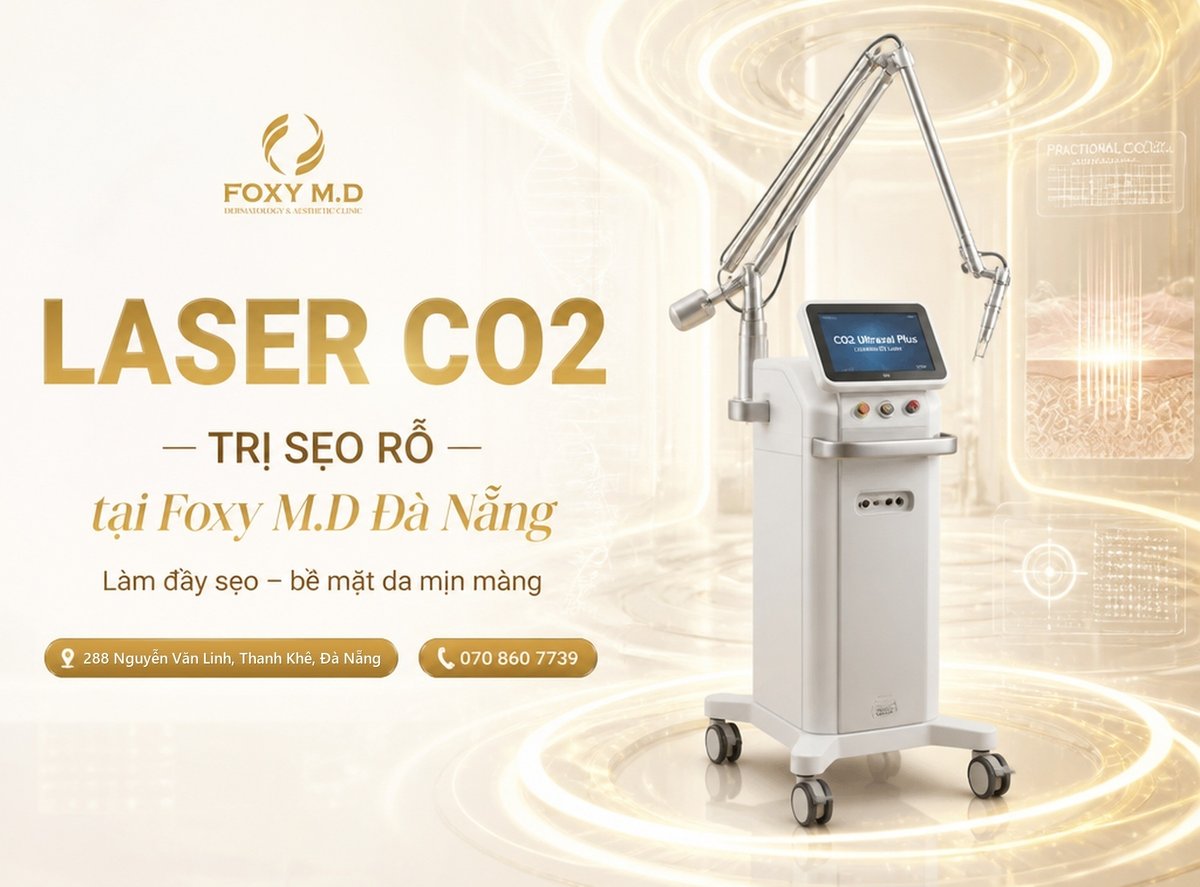
- The CO2 Ultraxel Plus fractional laser is available; see the article Fractional CO2 laser for atrophic scars.
- Subcision, TCA Cross, Mesotherapy and Rejuran S mesotherapy injection are available in the atrophic scar treatment protocol.
- Other restorative injection therapies are in the skinbooster, mesotherapy, PRP group.
8 Conclusion
PRP for atrophic scars uses growth factors from your own blood to help the skin regenerate, and works most effectively when combined with microneedling or laser. PRP suits thin skin and shallow scars; laser suits deep scars; the doctor decides after the examination.
If you are torn between PRP and laser, the quickest way is to let the doctor look at your scar type, depth and skin thickness in person. A suitable treatment plan usually gives better results than trying each method separately. Book an examination at Foxy M.D, 288 Nguyen Van Linh, Thanh Khe, Da Nang, or call the hotline 070 860 7739 – 093 157 1185 for advice.
9 Quick summary of this article
- PRP is platelet-rich plasma from your own blood, containing growth factors that help the skin produce collagen.
- PRP helps improve shallow scars and speeds up recovery; it works most effectively when combined with microneedling or laser.
- PRP suits thin, sensitive skin and shallow scars; Fractional laser suits deep, long-standing scars.
- Do not have PRP with low platelet counts, bleeding disorders, anticoagulant use or skin infection.
- Foxy M.D menu: PRP for scar treatment from $124/session; included in the Premium scar package together with Micro Needling.
10 Frequently asked questions
1. Is PRP good for atrophic acne scars?
PRP can help improve shallow atrophic scars, strengthen the skin and speed up recovery after procedures. However, for deep scars, ice-pick scars or scars tethered by fibrous bands, PRP alone is usually not enough. Doctors often use PRP as part of a combined treatment plan with microneedling, Fractional laser or subcision.
2. How many PRP sessions are needed for atrophic scars?
The number of sessions depends on the severity of the scars and the combined treatment plan. Atrophic scars usually need several sessions, each a few weeks apart, so that collagen has time to form. The doctor will estimate the number of sessions after the examination and adjust it based on the actual improvement. You can also choose a scar treatment package that includes a PRP session combined with Micro Needling.
3. Which is better for atrophic scars, PRP or laser?
Each method has its own strengths. Fractional laser resurfaces more strongly and suits deep, long-standing scars. PRP suits thin, sensitive skin and shallow scars and helps the skin recover. In many cases the doctor combines both for better results, so the answer depends on your scar type and skin.
4. Does PRP scar treatment hurt?
The skin is numbed beforehand, so most people only feel a tolerable prickling or tightness. The sensation depends on your pain threshold, the treatment area and whether microneedling is combined. Drawing blood from the arm feels like an ordinary blood test. Afterwards there may be redness, mild swelling or small bruises for a few days.
5. How long after PRP scar treatment will I see results?
The skin usually looks smoother and healthier after a few weeks, but changes at the base of the scars come from new collagen formation, so they happen gradually. You usually need to complete several sessions and wait a while after the last one to assess the results clearly. The degree of improvement depends on your constitution, scar depth, and your sun protection and skincare.
Article adapted from a post dated October 21, 2026 on the Foxy M.D Fanpage.