How often should you get HIFU lifting? The right interval between sessions based on your degree of aging
- 1How often should you get HIFU lifting?
- 2Is it a problem to get HIFU too often?
- 3HIFU lifting intervals by age and degree of aging
- 4What signs show it's time for another session?
- 5Who should and shouldn't get regular HIFU lifting?
- 6How much does CFU lifting cost per session and per year?
- 7Why choose CFU V-MAX lifting at Foxy M.D Da Nang?
- 8Conclusion
- 9Quick summary of this article
- 10Frequently asked questions

1 How often should you get HIFU lifting?
For CFU V-MAX (an upgraded generation of HIFU) at Foxy M.D, the menu recommends repeating about every 3–6 months. Mild aging may allow longer intervals, while visible sagging usually means more frequent sessions, based on the doctor's assessment.
HIFU and CFU both use focused ultrasound to deliver heat into the tissue layers beneath the skin, making the tissue contract and stimulating new collagen. Most of the effect comes from collagen that forms gradually over many weeks, so the interval between two sessions needs to be long enough for the body to complete the regeneration process, but not so long that aging visibly returns.
At Foxy M.D, the focused ultrasound device in use is CFU V-MAX. According to the service list effective from 10/03/2026, each session takes about 45–60 minutes and the treatment is repeated every 3–6 months. How it works and the treatment areas are covered in our main article on HIFU CFU V-MAX lifting in Da Nang; the progression of results at each milestone is covered in the article CFU lifting before and after.

2 Is it a problem to get HIFU too often?
Getting it too often won't give faster results and may increase the risk of damaging fat tissue, causing a hollow face along with pain and prolonged numbness. Collagen takes a few months to form, so keep to the interval prescribed.
Many people see a slimmer face right after the first session, then notice it "deflate" a few days later, so they want another session soon. In fact, the immediate tightening is mainly due to tissue contracting from heat; the longer-lasting improvement comes from new collagen, usually most visible after about 2–3 months. Repeating before the tissue has fully recovered can cause several downsides:
Risk of hollow cheeks
Repeated heat too close together in the superficial fat layer can cause volume loss, making the face look thinner and older.
Prolonged pain and numbness
Tissue that hasn't recovered is more sensitive, prone to soreness and temporary numbness in the jaw and cheekbone areas.
No added benefit
Collagen needs time to form; cramming sessions together doesn't speed up the process.
Unnecessary cost
More sessions without proportionate results; follow the schedule set by the doctor's assessment.
3 HIFU lifting intervals by age and degree of aging
People around 25–30 who want prevention usually space sessions further apart; people aged 30–45 with mild to moderate sagging usually follow a 4–6 month interval; people over 45 with visible sagging may follow a 3–4 month interval or combine other methods.
Age is only a guide; what matters is the degree of sagging, skin thickness, amount of facial fat and each person's rate of aging. The table below is a reference framework to help you picture it; the actual schedule is adjusted by the doctor based on the results of each follow-up visit:
Note: people with thin skin and little facial fat need to be more careful about frequency, and may be better suited to methods that improve skin quality such as Oligio X or rejuvenating injections instead of more focused ultrasound sessions.
| Group | Common condition | Reference interval | Can be combined with |
|---|---|---|---|
| Around 25–30 years old | No sagging yet, want prevention | Longer intervals, based on the doctor's assessment | Sun protection, basic skincare |
| Around 30–45 years old | Less defined jawline, mild double chin, cheeks starting to drop | About every 4–6 months | Rejuran or skinbooster when skin quality is poor |
| Over 45 years old | Visible sagging, deep smile lines, loose skin | About every 3–4 months | Thread lift, Oligio X as prescribed |
| Thin skin, little facial fat | Prone to hollowing with frequent sessions | Caution, longer intervals | Prioritize methods that improve skin quality |
4 What signs show it's time for another session?
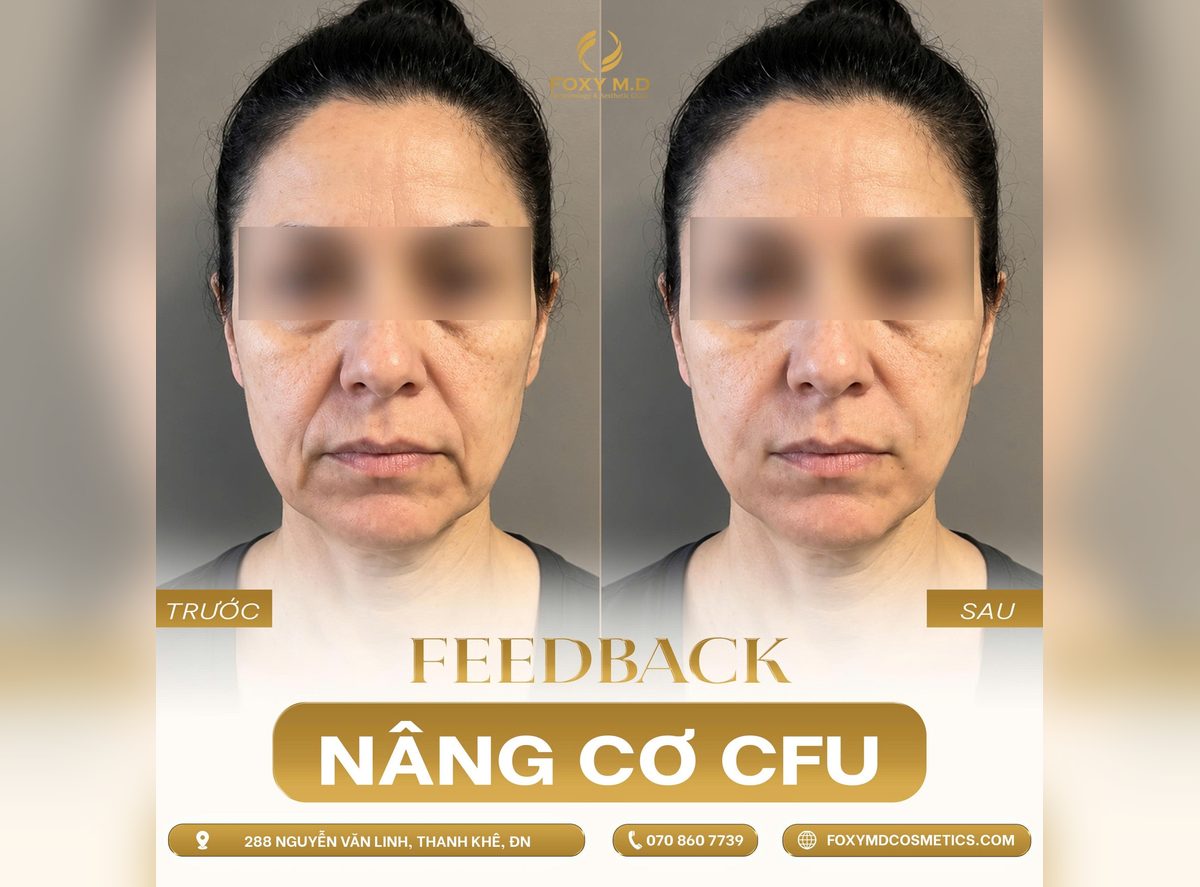
When the jawline gradually blurs and the double chin and sagging cheeks reappear compared with photos taken after treatment, usually after a few months, it's time for a follow-up so the doctor can decide whether to repeat yet.
The most objective way is to compare photos taken from the same angle and in the same lighting before treatment, after 2–3 months and now. How you feel looking in the mirror every day can be misleading. Common signs:
Less defined jawline
The line from the ear to the chin is no longer as defined as it was 2–3 months after treatment.
Double chin visible again
The area under the chin looks looser when viewed from the side or when tilting the head slightly down.
Sagging cheeks, deeper smile lines
The cheek fat pad moves down and the nasolabial folds look deeper when not smiling.
Less firm, less elastic skin
When you gently pinch the cheek skin, it takes longer to bounce back and the surface looks less taut.
5 Who should and shouldn't get regular HIFU lifting?
Suitable for people with mild to moderate sagging who want to maintain defined contours without surgery. Avoid it during pregnancy, with a skin infection in the treatment area, with metal implants in the face that haven't been assessed, or with severe sagging that requires surgery.
Focused ultrasound lifting does not replace a surgical facelift when there is a lot of excess skin. In that case, the doctor will explain the limits clearly so you have realistic expectations. People whose double chin is mainly due to fat may also need a fat-dissolving injection for the double chin.
Good fit: mild to moderate sagging
Blurred jawline, mild double chin, cheeks starting to drop; want regular maintenance.
Suitable: after a thread lift or filler
Can be used to maintain firmness; the specific timing is prescribed by the doctor.
Not suitable: pregnancy, skin inflammation
Pregnancy, inflamed acne, infection or open wounds in the treatment area.
Tell your doctor beforehand
Metal implants, recent filler, autoimmune disease, bleeding disorders, tendency to keloid scars.
6 How much does CFU lifting cost per session and per year?
According to the price list effective from 10/03/2026, CFU lifting at Foxy M.D starts from $158 per session depending on the area (double chin, full face, or face + double chin), with unlimited shots. The annual cost depends on the number of sessions the doctor prescribes.
With an interval of every 3–6 months, a year usually includes about 2–4 sessions. The table below helps you estimate in advance; the actual figure depends on your degree of aging, the treatment area and whether other methods are combined. See also the advanced laser technology group and the Foxy M.D price list.
| Treatment area | Price per session | Duration | Repeat interval (menu) |
|---|---|---|---|
| Double chin | From $158 | 45–60 minutes | Once every 3–6 months |
| Full face | From $237 | 45–60 minutes | Once every 3–6 months |
| Face + double chin | From $356 | 45–60 minutes | Once every 3–6 months |
7 Why choose CFU V-MAX lifting at Foxy M.D Da Nang?
At Foxy M.D, the doctor examines you and sets the repeat schedule based on your actual degree of aging instead of selling a fixed package; prices are listed by area with unlimited shots, and combined methods are available when needed.
A sensible schedule helps you maintain results without paying for unnecessary sessions. Information about our medical team is on the Our Team page. For a comparison with RF technology, see the article how Oligio X and HIFU differ.
Personalized repeat schedule
Follow-up visits and photo comparisons at each milestone to decide when to do the next session.
Priced by area, no shot limit
Number of shots based on your face's needs, with no extra charge per shot.
Combined treatments when needed
Rejuran, thread lift, Oligio X and fat-dissolving injections for different signs of aging.
Post-treatment follow-up
Aftercare instructions and prompt management of any unusual reactions.
8 Conclusion
HIFU lifting, specifically CFU V-MAX at Foxy M.D, is usually repeated every 3–6 months depending on your degree of aging. Getting it too often won't give faster results; follow the schedule set by the doctor after each follow-up visit.
If you've had a lifting treatment and are wondering whether it's time to repeat, or you're just starting and want to know the right schedule, book an appointment for an in-person assessment by the doctor. Hotline 070 860 7739 – 093 157 1185, Foxy M.D address: 288 Nguyen Van Linh, Thanh Khe, Da Nang.
Read more: CFU V-MAX Lifting Before and After
9 Quick summary of this article
- CFU V-MAX lifting, an upgraded generation of HIFU, is recommended to be repeated about every 3–6 months according to the menu.
- Getting it too often doesn't increase the effect and may cause hollow cheeks, pain and prolonged numbness.
- The interval depends on the degree of sagging, skin thickness and amount of facial fat, not just age.
- Price per session: from $158 depending on the area (double chin, full face, face + double chin), unlimited shots.
10 Frequently asked questions
1. How often should HIFU lifting be repeated?
For the CFU V-MAX device at Foxy M.D, the menu recommends repeating about every 3–6 months. People with mild aging may space sessions further apart, while those with visible sagging usually repeat sooner. The doctor will compare photos from each milestone and re-examine you to decide the right timing for each person.
2. Can I get HIFU once a month?
Usually not. New collagen takes a few months to form; repeating after one month won't give faster results and may treat tissue that hasn't recovered yet, increasing the risk of hollow cheeks, pain and prolonged numbness. If you feel the results are fading early, come back for a follow-up so the doctor can assess the cause.
3. How long do HIFU lifting results last?
How long results last depends on your age, degree of sagging, sun protection habits, sleep and weight. New collagen is still affected by natural aging, which is why the Foxy M.D menu recommends repeating every 3–6 months to maintain defined contours.
4. Can frequent HIFU cause hollow cheeks?
It can happen if sessions are too frequent, the energy isn't suitable, or in people with thin skin and little facial fat. The doctor adjusts the depth, energy and treatment areas to your face to limit this risk. People prone to hollowing are usually advised to space sessions further apart or combine methods that improve skin quality.
5. Do CFU and HIFU have different treatment schedules?
CFU is an upgraded generation of HIFU; both use focused ultrasound, but CFU distributes energy more evenly and precisely. The repeat schedule is still based on each person's rate of aging. At Foxy M.D, the device in use is CFU V-MAX, with a reference interval of every 3–6 months according to the menu.
6. What should I avoid after HIFU lifting?
For the first 2–3 days, use thorough sun protection, avoid saunas, very hot showers and alcohol, and don't massage the jaw area vigorously. The skin may be red, warm or slightly sore, which goes away on its own. Tell your doctor if numbness persists, or if blisters, lumps or worsening pain appear.
Article edited from a post dated 21/10/2026 on the Foxy M.D Fanpage.