Should you pop inflamed acne? What happens when you squeeze it wrong and how to treat inflamed acne the dermatological way
- 1Should you pop inflamed acne?
- 2What happens if you squeeze inflamed acne the wrong way?
- 3When can inflamed acne be extracted, and by whom?
- 4How to treat inflamed acne properly instead of squeezing
- 5Who should see a doctor instead of treating inflamed acne at home?
- 6Cost of inflamed acne treatment at Foxy M.D
- 7Why choose inflamed acne treatment at Foxy M.D Da Nang?
- 8Conclusion
- 9Quick summary of this article
- 10Frequently asked questions

1 Should you pop inflamed acne?
You should not squeeze inflamed acne yourself, especially when the pimple is still red, swollen, painful and has not come to a head. Squeezing at this stage easily spreads the inflammatory fluid, makes the pimple bigger and increases the risk of dark marks and atrophic scars.
Inflamed acne is a clogged pore that has been affected by C. acnes bacteria and the body's inflammatory response. Inside the pimple is a mixture of sebum, dead cells, bacteria and white blood cells, surrounded by a weakened follicle wall. When you press hard with your fingers, the wall easily ruptures downward, spilling inflammatory material into the surrounding skin tissue.
As a result, the pimple swells more, spreads to nearby areas, takes longer to heal and leaves red or brown marks that last for months. With deep inflamed acne, the collagen around the follicle is destroyed, leaving depressed scars that are hard to repair.
The before-and-after image at the top of the article, shared by Foxy M.D on its fanpage, illustrates a case of inflamed acne on both cheeks treated with a set protocol; the degree of improvement differs for each person depending on their skin and how closely they follow the treatment.
2 What happens if you squeeze inflamed acne the wrong way?
Squeezing the wrong way can spread inflammation and infection, cause long-lasting post-inflammatory marks, atrophic scars from collagen loss and broken capillaries, and in the danger triangle around the nose and mouth there is a risk of spreading infection.
Many people think that getting all the pus out will make the pimple heal faster. In reality, most inflamed pimples squeezed too early take longer to heal than those left alone and treated properly.
Spreading inflammation
A ruptured follicle wall lets inflammatory fluid spread to the surrounding tissue, and one pimple can turn into a cluster of red, swollen spots.
Post-inflammatory marks
Asian skin is prone to post-inflammatory hyperpigmentation; brown marks can last for months after the pimple heals.
Atrophic scars
Squeezing deep inflamed acne hard damages collagen, leaving depressed scars that are hard to repair and need multiple treatment sessions.
Infection
Unsterile hands and tools introduce more bacteria into the open wound. The area around the nose and upper lip needs special care.
3 When can inflamed acne be extracted, and by whom?
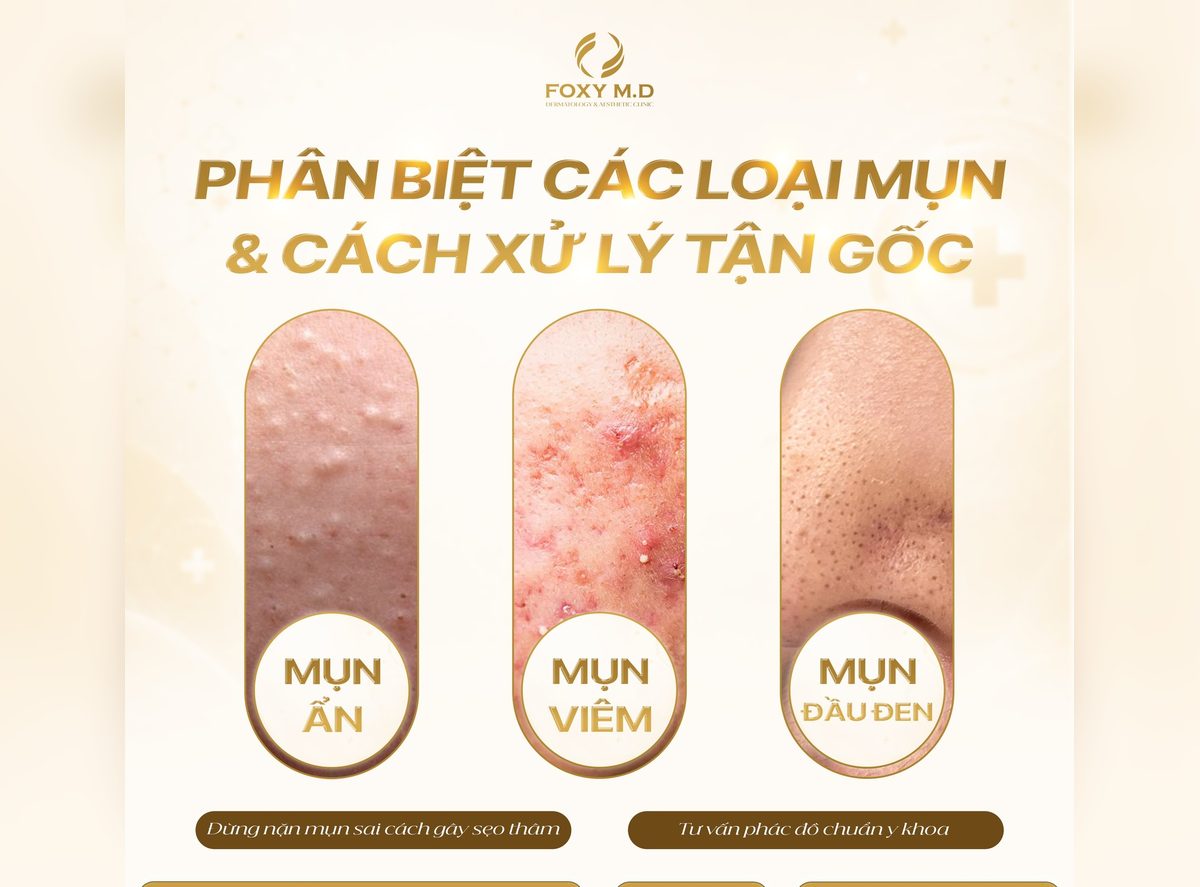
Inflamed acne should only be extracted once it has come to a head with a clear pus tip, is superficial and is no longer very swollen or painful. Extraction should be done by a technician or doctor with sterile instruments, not at home.
Below is how to tell the stages apart, so you know when to leave a pimple alone and when it can be treated at the clinic. The standard extraction procedure is in the article medical-standard acne extraction.
| Stage | Signs | Can it be extracted? | Approach |
|---|---|---|---|
| Papules | Red, swollen, painful to the touch, no pus yet | No | Reduce inflammation: topical medication, light therapy, cool compresses |
| Pustule that has come to a head | Clear white-yellow pus tip, little swelling around it | Yes, at the clinic | Gently extracted with sterile instruments, disinfected afterward |
| Pustule not yet come to a head | Small specks of pus, surrounding area still very swollen | Not yet | Wait for it to come to a head, help reduce inflammation |
| Nodules, cysts | Deep, painful swelling that lasts | Do not extract yourself | Doctor assessment, possibly an anti-inflammatory injection or medication |
| Inflamed acne that has flattened | A red mark remains, no more pus | Not needed | Repair care, sun protection, treating the marks |
4 How to treat inflamed acne properly instead of squeezing
Instead of squeezing, inflamed acne should be calmed with prescribed topical or oral medication, light therapy such as DPL and bio-light, acne peels, combined with gentle cleansing, repairing moisturizer and sunscreen at home.
The specific protocol depends on the number of pimples, their depth and the cause. Some options the doctor commonly considers:
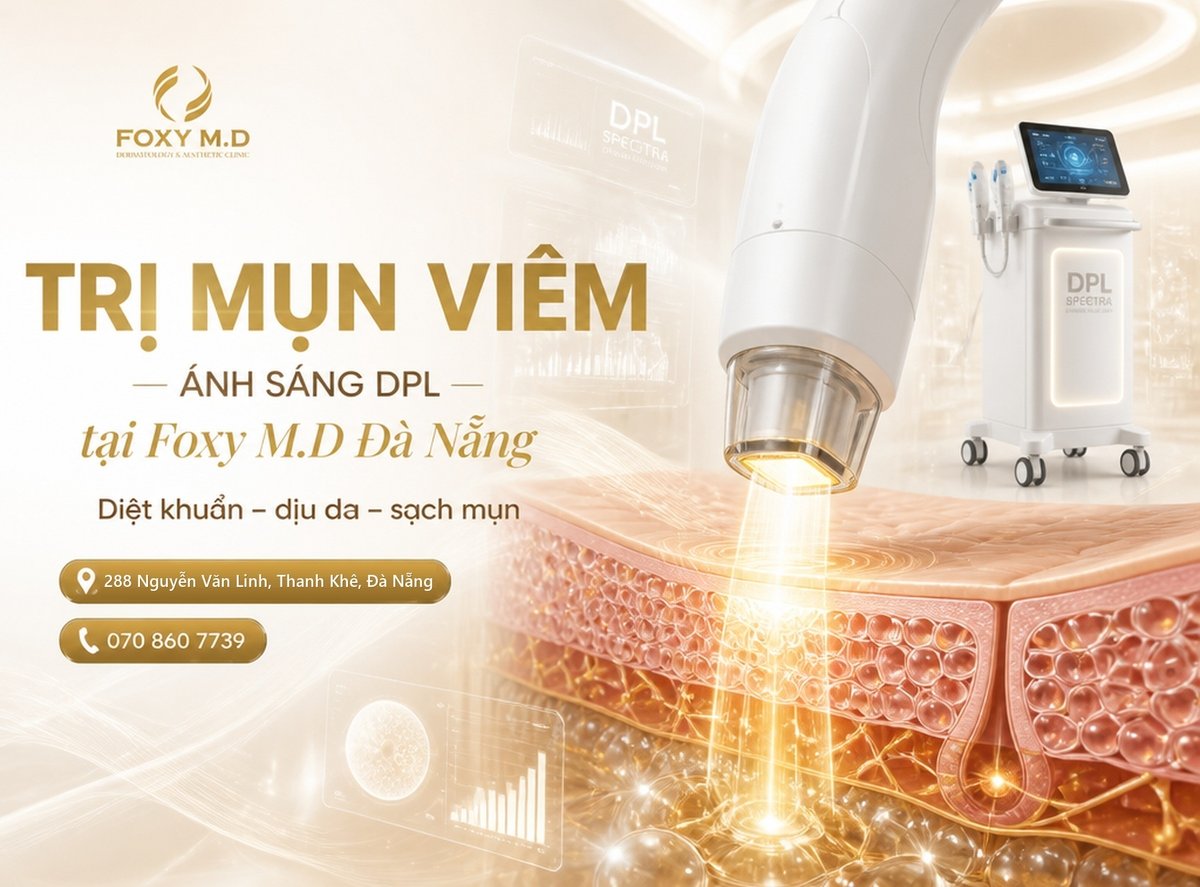
- DPL light: helps reduce bacteria and red marks; details in the article inflamed acne treatment with DPL.
- Celluma/PDT bio-light therapy: helps soothe the skin and support recovery after extraction.
- Acne peels: Comodex, Recovery and Redness lines help reduce oiliness and inflammation; see the article chemical peels for acne and brighter skin.
- Anti-inflammatory injection: used for cystic acne as prescribed by the doctor.
- Topical and oral medication: only use as prescribed; avoid buying antibiotics or hormonal medication on your own.
At home, wash your face gently twice a day, do not scrub, do not apply leaves or toothpaste to pimples, avoid touching your face and change your pillowcase often. After an extraction, follow the guidance in the article what to do after acne extraction.

5 Who should see a doctor instead of treating inflamed acne at home?
You should see a doctor if you have many inflamed pimples, cystic acne, acne that keeps coming back, acne that has left marks or scars, or if squeezing has made a pimple swell up. People with mild acne and just a few scattered spots can care for them at home and monitor.
See a doctor early if you have:
- More than 10 inflamed pimples, or acne spreading quickly over a few weeks.
- Painful cystic or nodular acne on the jawline or cheeks.
- Acne leaving depressed scars or long-lasting marks.
- Squeezed a pimple yourself and it has become swollen, hot and more painful.
- Acne along with irregular periods or excess hair growth, suspected to be hormonal.
Can be monitored at home:
- A few small inflamed pimples that appear with your cycle and flatten on their own after a few days.
- No cystic acne, no scars.
Note: if a pimple comes with fever, spreading hot swelling, or is around the eyes or nose, go to a medical facility right away.
6 Cost of inflamed acne treatment at Foxy M.D
According to the Foxy M.D price list from March 10, 2026: Acne Facial from $13, DPL from $25, acne peel from $29, and the 5-session acne skin package from $107. The doctor will recommend the right service after the examination.
Mild inflamed acne usually starts with acne skincare combined with DPL; extensive inflamed acne with marks and scars is usually advised as a package that combines several methods. The initial consultation is free of charge.
| Service (Foxy M.D menu) | Listed price | Notes |
|---|---|---|
| Acne Facial | From $13 | Care for moderate to severe acne-prone skin, acne extraction |
| DPL | From $25 | Treats inflamed acne, reduces red marks |
| Detox CO2 | From $25 | Detoxifies the skin, helps reduce inflamed acne |
| Acne peel | From $29 | Comodex / Recovery / Redness |
| Basic acne skin package, 5 sessions | From $107 | Acne Facial, DPL, peel |
| Standard 5-session acne package | From $154 | Adds Deep Cleansing and Laser Pico |
| Premium acne skin package, 5 sessions | From $308 | Adds Mesotherapy and PRP |
7 Why choose inflamed acne treatment at Foxy M.D Da Nang?
At Foxy M.D, a dermatologist assesses which stage each pimple is at to decide whether to extract it or reduce inflammation first, combining light therapy, peels and prescribed medication to help limit marks and scars caused by treating at the wrong time.
- The doctor examines and classifies your acne and finds the cause before treatment.
- Acne extraction with sterile instruments, only for pimples that are ready.
- DPL Spectra, Celluma/PDT, Aqua Peel and a range of acne peels are available to combine.
- Clear home-care instructions and follow-up schedule.
Learn more about common types of acne or the facial care service group. If acne has left scars, see the article atrophic scar treatment.
8 Conclusion
Do not squeeze inflamed acne yourself, especially while it is still red and swollen and has not come to a head. Reducing inflammation first and only extracting when it is ready, with sterile instruments, is the way to limit marks and atrophic scars.
Wanting to squeeze right away is normal, but the price may be months of dark marks or years of depressed scars. Let inflamed acne be treated at the right stage.
Book an appointment at Foxy M.D Dermatology & Aesthetic Clinic, 288 Nguyen Van Linh, Thanh Khe, Da Nang, hotline 070 860 7739 – 093 157 1185, for the doctor to analyze your skin and advise a suitable treatment plan for inflamed acne.
9 Quick summary of this article
- Do not squeeze inflamed acne yourself while it is red, swollen, painful and has not come to a head.
- Squeezing the wrong way easily causes spreading inflammation, post-inflammatory marks, atrophic scars and infection.
- Pustules that have come to a head can be extracted at the clinic with sterile instruments; cystic acne needs a doctor.
- Foxy M.D menu prices: Acne Facial from $13, DPL from $25, acne peel from $29, 5-session acne skin package from $107.
10 Frequently asked questions
1. Should you pop inflamed acne?
You should not squeeze inflamed acne yourself, especially when the pimple is still red, swollen, painful and has no pus head. Squeezing at this stage can easily rupture the follicle wall and push inflammatory fluid into the surrounding tissue, making the pimple bigger and leaving dark marks or atrophic scars. Reduce the inflammation first and let a specialist extract it once it has come to a head.
2. How long does it take for inflamed acne to come to a head?
It usually takes a few days to a week depending on depth and your skin. Superficial pimples may form a pus head after 3 to 5 days, while deep cystic acne may never come to a head and instead flatten gradually. Do not use needles or press with your fingers to force it to a head, as this easily causes more damage.
3. What should I do if I have already squeezed an inflamed pimple?
Wash your hands, gently clean the area with saline or a mild antiseptic, and do not squeeze any further. You can dab on an acne product as directed, use a repairing moisturizer and sunscreen to limit dark marks. If the area becomes hot and swollen, the pain increases or you have a fever, see a doctor right away.
4. Can inflamed acne without a core be squeezed?
No. Inflamed bumps with no core or pus have nothing to extract; squeezing only damages the skin and increases inflammation. These spots usually improve with topical medication as directed, anti-inflammatory light such as DPL, or an acne peel. The doctor will choose the right approach based on the number and depth of your pimples.
5. Can I extract cystic acne myself?
No. Cystic acne sits deep in the dermis; trying to squeeze it almost never gets anything out and instead ruptures the cyst, spreads inflammation and increases the risk of depressed scars. The doctor may give an anti-inflammatory injection, prescribe medication or combine light therapy to reduce swelling. Cystic acne that keeps coming back also needs its cause investigated, such as hormones.
6. Is acne extraction better at a spa or a dermatology clinic?
What matters is that the person doing it knows which pimples can be extracted and which need the inflammation reduced first, and that instruments are sterilized properly. At a dermatology clinic, the doctor can combine medication, light therapy and peels when there is a lot of inflamed acne, and spot early the cases that need more intensive treatment.
Article edited from a post dated October 21, 2026 on the Foxy M.D Fanpage.