Causes of facial melasma: 5 common factors, why women are more prone and how to treat it appropriately
- 1What is facial melasma and how does it form?
- 2The 5 most common causes of facial melasma
- 3Causes of melasma in women: why are women more prone?
- 4Causes of melasma and the matching treatments
- 5Who is prone to melasma and who should see a doctor early?
- 6Cost of melasma consultation and treatment at Foxy M.D
- 7Why choose Foxy M.D Da Nang for a melasma examination?
- 8Conclusion
- 9Quick summary of this article
- 10Frequently asked questions

1 What is facial melasma and how does it form?
Facial melasma is a chronic hyperpigmentation condition that creates symmetrical brown or gray patches or spots on the cheekbones, forehead, bridge of the nose and upper lip. It forms when pigment cells are stimulated to overproduce melanin, usually due to several factors adding up.
In the skin, pigment cells (melanocytes) produce melanin to shield cells from the harmful effects of light. Normally this process is well regulated. In people with melasma, the pigment cells become more "sensitive": just a little sun, a hormonal change or a bout of skin irritation is enough for them to step up melanin production, creating brown marks on the areas of skin most exposed to light.
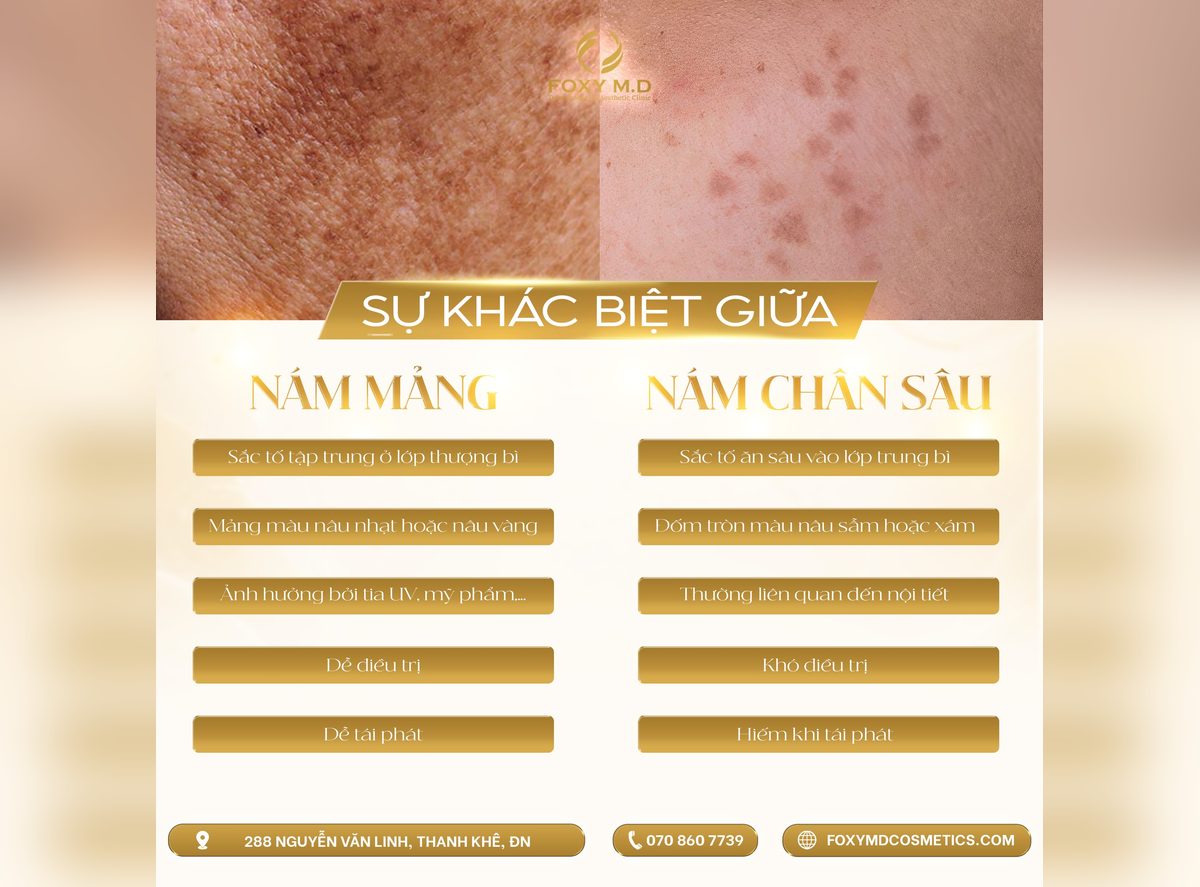
The key point: melasma rarely has a single cause. Usually an underlying predisposition (genetics, hormones) sets the "conditions", while sun, heat and incorrect cosmetics are the "spark" that makes melasma appear and darken. Understanding the causes correctly helps you know which factors you can control and where treatment should start. If you want to know whether your melasma is superficial or deep, read our article epidermal vs. deep (dermal) melasma.
2 The 5 most common causes of facial melasma
The five common causes of facial melasma are: sun and heat, hormonal changes, genetics, corticosteroid-containing cosmetics or "mixed" creams, and heavy exposure to screen light. Of these, sunlight is the most important factor.
These are also the 5 "culprits" Foxy M.D doctors encounter most often when taking the history of patients who come in for melasma. Each factor acts through a different mechanism:
1. Sun, UV rays and heat
UVA, UVB and even visible light stimulate pigment cells to become highly active. High temperatures (harsh sun, hot kitchens, saunas) also help make melasma darker.
2. Hormonal changes
Estrogen and progesterone make pigment cells more sensitive. Melasma often appears during pregnancy, while taking birth control pills, with menstrual irregularities or during perimenopause.
3. Genetics
Many people with melasma have a mother or sisters who also have it. Asian skin and medium to tan skin are more prone to hyperpigmentation than very fair skin.
4. Corticosteroid-containing cosmetics and "mixed" creams
"Mixed" creams and peeling creams of unknown origin thin the skin, break down its protective barrier and cause prolonged irritation. Weakened skin is more prone to hyperpigmentation, and melasma becomes harder to treat.
5. Screen light
Blue light from computers and phones can contribute to increased pigmentation in darker skin. Its effect is lower than the sun's but adds up when you sit at a screen for long hours every day.
3 Causes of melasma in women: why are women more prone?
Women are more prone to melasma than men mainly because of hormonal fluctuations through life stages: pregnancy, the postpartum period, birth control pills and perimenopause. Heavy use of cosmetics and prolonged stress also contribute.
Melasma occurs in both men and women, but the rate is clearly higher in women of reproductive age. Some common situations:
- Pregnancy melasma: appears in the second or third trimester. Some of it may gradually fade after giving birth, but many people still have melasma if they do not protect their skin well from the sun.
- Birth control pills, hormone therapy: change hormone levels, making pigment cells easier to stimulate. If melasma appears after you start a medication, talk to the doctor who prescribed it rather than stopping on your own.
- Perimenopause, menstrual irregularities: prolonged hormonal fluctuations are often accompanied by deep or mixed melasma.
- Associated conditions: some studies have noted a link between melasma and thyroid disorders. The doctor may suggest further checks if there are suspicious signs.
- Stress, lack of sleep: alter stress hormones, affecting the skin barrier and its ability to recover.
In addition, women tend to use more skincare products. Habits such as harsh exfoliation, using many active ingredients at once or chasing "fast whitening" creams are indirect causes of skin irritation and dullness.
4 Causes of melasma and the matching treatments
Each cause needs its own approach: sun protection for light-related factors, hormonal management with a specialist, skin repair after using "mixed" creams, and only then combining laser, mesotherapy and peels as prescribed to fade the pigment.
Effective melasma treatment means both removing or reducing the causes and fading the pigment that has already formed. If you only have laser treatment but keep getting sun exposure, or keep applying "mixed" creams, melasma usually comes back quickly.
At the clinic, the doctor may combine Laser Pico for melasma to break up pigment particles, brightening mesotherapy injections to deliver melanin-inhibiting actives into the dermis, and brightening peels for superficial pigment, along with prescribed products to apply at home. For severe melasma covering many areas, a multi-layer melasma treatment package may be considered.
| Cause | Can it be controlled? | What to do | In-clinic support |
|---|---|---|---|
| Sun, UV rays, heat | Yes, largely | Broad-spectrum sunscreen, physical cover, avoiding harsh sun | Laser and peels to fade existing pigment |
| Hormones | Partly | Consult an obstetrician-gynecologist or endocrinologist | Brightening mesotherapy, low-energy laser |
| Genetics | No | Early sun protection, regular check-ups | Maintenance on the doctor's schedule |
| "Mixed" creams, corticosteroids | Yes | Stop the products as instructed and repair the skin | Repair the skin barrier before laser |
| Screen light | Yes, partly | Sun protection even indoors, lower screen brightness | According to the standard protocol |
5 Who is prone to melasma and who should see a doctor early?
People with relatives who have melasma, pregnant women, people taking hormonal medication, people who work outdoors or who have used "mixed" creams are prone to melasma. See a doctor early if the brown marks are spreading, getting darker or have not improved after a few months of self-care.
See a dermatologist early if you:
- Notice symmetrical brown or gray patches on both cheeks or the forehead that have appeared in the last few months.
- Have been using sunscreen and skincare consistently, but the melasma keeps getting darker.
- Have used "mixed" creams and now have red, thin skin, visible blood vessels or a stinging sensation.
- Have pigmented marks that change shape, have irregular edges, itch or ooze: get examined to rule out lesions other than melasma.
Do not have laser or peels right away if you are:
- Pregnant or breastfeeding: prioritize sun protection and gentle care as instructed by your doctor.
- Experiencing inflamed, sunburned or infected skin, or just back from the beach.
- Taking medication that increases light sensitivity and have not told your doctor.
Note: do not buy specialized creams based on advertising before the cause of your melasma is clear. Using the wrong active ingredients can irritate the skin and make it darker.
6 Cost of melasma consultation and treatment at Foxy M.D
According to the menu effective March 10, 2026, a dermatology consultation at Foxy M.D is from $4 and cosmetic consultations are free. Laser Pico is from $43 per session, brightening peels from $33 and brightening mesotherapy injections from $83, depending on the product.
The cost of melasma treatment varies with the depth of the pigment, the area affected and the underlying cause. Superficial, sun-related melasma usually needs fewer sessions; hormone-related melasma or skin damaged by "mixed" creams needs time to recover and a longer protocol. The doctor will tell you the expected number of sessions after the examination so you can plan ahead.
| Services | Cost per menu |
|---|---|
| Aesthetic consultation | Free |
| Dermatology consultation | From $4 |
| Laser Pico | From $43/session |
| Brightening peel | From $33 |
| Brightening mesotherapy injection | From $83 |
| Remee Pro 9 mesotherapy injection device | From $12 |
| Melasma treatment packages, Chrome laser | As prescribed by the doctor |
7 Why choose Foxy M.D Da Nang for a melasma examination?
At Foxy M.D, a dermatologist personally analyzes your skin and takes a careful history to find the cause of your melasma, and only then builds a protocol combining laser, mesotherapy, peels and home care suited to each person.
As shown in the photos shared by Foxy M.D on its fanpage, every client receives an individual consultation and skin analysis with the doctor before treatment. This approach helps distinguish melasma from freckles, post-inflammatory hyperpigmentation or age spots, and identifies the factors that are making the melasma darker.
- Dermatology specialists personally examine you and perform the procedures.
- Several technologies to choose from: Laser Pico Allux-Q, Chrome laser, brightening mesotherapy, peels.
- Prices listed on the menu and explained before treatment.
- Guidance on sun protection, home care and follow-up appointments.
See the full treatment protocol in our article medical-standard melasma treatment in Da Nang or on our advanced treatments page.
8 Conclusion
Facial melasma is usually caused by a combination of sun, hormones, genetics, incorrect cosmetics and screen light. Controlling the causes and following the right treatment protocol helps melasma fade and reduces recurrence.
If you have brown marks on your face and are not sure of the cause, book an appointment so a Foxy M.D doctor can analyze your skin and advise you on how to treat it. Hotline: 070 860 7739 – 093 157 1185. Address: 288 Nguyen Van Linh, Thanh Khe, Da Nang.
Read more: How to Apply Melasma Cream Correctly: Order of Steps and What to Do If It Stings or Darkens
9 Quick summary of this article
- Facial melasma is usually caused by several factors adding up, not just one.
- The five common causes: sun and heat, hormones, genetics, corticosteroid-containing cosmetics or "mixed" creams, and screen light.
- Women are more prone to melasma due to hormonal fluctuations during pregnancy, while taking birth control pills and in perimenopause.
- Effective treatment requires both controlling the causes and fading the pigment with laser, mesotherapy and peels as prescribed.
- Foxy M.D menu prices: dermatology consultation from $4, Laser Pico from $43 per session, brightening mesotherapy from $83.
10 Frequently asked questions
1. What is the most common cause of facial melasma?
Sunlight is the most common and most important cause, including UVA, UVB and even visible light. The sun both triggers melasma and makes existing melasma darker. That is why, whichever treatment you choose, daily sun protection remains the foundation for melasma to fade and not return quickly.
2. How do the causes of melasma differ between women and men?
In women, melasma is often strongly linked to hormones, such as pregnancy, the postpartum period, birth control pills or perimenopause. In men, melasma is usually caused by sun, genetics and working outdoors a lot. Although the underlying causes differ, both need sun protection and an examination to choose a suitable treatment protocol.
3. Are the causes of melasma related to how it is treated?
Yes, because each cause needs its own approach. Sun-related melasma needs careful sun protection combined with laser or peels; hormonal melasma usually needs a longer protocol, possibly combined with brightening mesotherapy; skin damaged by "mixed" creams must be repaired first. If the cause is ignored, melasma easily comes back after treatment.
4. Can heavy phone and computer use cause melasma?
Blue light from screens can contribute to increased pigmentation, especially in Asian skin, but its effect is much lower than the sun's. If you sit at a screen for many hours a day, you should still use a sunscreen that protects against visible light, lower the screen brightness and keep a reasonable distance.
5. Does hormonal melasma go away on its own?
Pregnancy melasma may gradually fade after giving birth in some people, but in many cases it remains if the skin is exposed to the sun. Melasma linked to birth control pills or perimenopause often lasts a long time. You should have an examination so the doctor can assess it, as hormonal melasma is often deep or mixed and needs a suitable protocol.
6. Do I need any tests for melasma?
In most cases, melasma is diagnosed through examination and skin analysis, with no tests needed. However, if there are signs of hormonal disorders, irregular periods or suspected thyroid disease, the doctor may suggest further checks with the appropriate specialist to control the underlying factors.
Article edited from a post dated 30/09/2026 on the Foxy M.D Fanpage.