How to apply melasma cream correctly: the order of steps, what to do if it stings or your skin gets darker, and when to see a doctor
- 1What are the steps to apply melasma cream correctly?
- 2Melasma cream or serum first?
- 3Melasma cream stings or causes redness: what should you do?
- 4Skin gets darker with melasma cream: why?
- 5Who can rely on cream at home, and who should get treatment at a clinic?
- 6Cost of melasma consultation and treatment at Foxy M.D
- 7Why choose Foxy M.D in Da Nang for melasma treatment?
- 8Conclusion
- 9Quick summary of this article
- 10Frequently asked questions

1 What are the steps to apply melasma cream correctly?
Applying melasma cream correctly means: cleansing gently, patting dry, applying a thin layer of the melasma product to the affected areas as directed, letting it absorb, then moisturizing, and always finishing with a broad-spectrum sunscreen during the day.
Many people focus on choosing a "strong" cream and overlook how to use it. In reality, how you apply it matters as much as the product: applying too thickly, applying to damp skin or using too many actives at once can easily cause irritation and make the skin darker. With a new product, start every other day and patch-test on a small area for a few days first; if your skin tolerates it, gradually increase how often you use it.
Melasma cream is a long-term treatment. Pigmentation takes many weeks to fade, so assess the results after at least 8 to 12 weeks of consistent use instead of constantly switching products.
Cleanse gently
Use a mild-pH cleanser without scrubbing particles and lukewarm water. Pat dry with a clean towel and avoid rubbing hard.
Wait until the skin is completely dry
Wait a few minutes after washing your face. Damp skin absorbs actives faster than expected, which can easily cause stinging.
Apply the melasma product
Take a small amount, dot it evenly over the melasma areas and spread it thinly. Avoid the areas around the eyes, the corners of the nose and the corners of the mouth unless the product is meant for them.
Moisturize to restore the skin
Once the product has absorbed, apply a moisturizer with soothing, hydrating ingredients to limit dryness and peeling.
Sunscreen during the day
Apply enough broad-spectrum sunscreen and reapply when you are outdoors for a long time or sweating. This step is key to getting results.
2 Melasma cream or serum first?
The general rule is to apply from thinnest to thickest texture: serum first, cream after. If your serum and melasma cream contain different strong actives, ask your doctor about splitting them between morning and evening to avoid layering too many actives and causing irritation.
The reason for the "thin first, thick after" rule is that light-textured products absorb quickly, while thicker creams form a moisture-sealing layer on top. If you apply a thick cream first, the serum struggles to absorb. However, with melasma products prescribed as part of a treatment plan, the doctor sometimes asks you to apply them directly to clean skin first so the active works most effectively. Follow the specific instructions you were given at your consultation.
Common brightening actives in cosmeceuticals, such as niacinamide, vitamin C and arbutin, can be used in the same routine, but they do not always work well together on sensitive skin. Adding one product at a time, a few weeks apart, will help you find out which product causes irritation.
| Time of day | Suggested order | Notes |
|---|---|---|
| Morning | Cleanse → antioxidant, brightening serum → moisturizer → sunscreen | Do not skip sunscreen, even indoors |
| Evening | Remove makeup, cleanse → melasma cream/serum as prescribed → restorative moisturizer | Use only one strong treatment product each evening |
| When the skin is stinging or peeling | Gentle cleanse → restorative moisturizer → sunscreen | Pause treatment products and tell your doctor |
| Sau laser, peel | As directed by your doctor | Treatment products are usually paused for the first few days |
3 Melasma cream stings or causes redness: what should you do?
Mild tingling in the first few minutes can happen with some actives, but lasting burning, redness, peeling patches, swelling or itching are signs of irritation. In that case, stop the product, rinse your face with cool water, use a restorative moisturizer and see a doctor if it does not improve.
Stinging from melasma cream is usually caused by: an active that is too strong for your skin, applying too many layers, combining several products with acids or retinol at the same time, or a skin barrier already weakened by mixed creams or harsh exfoliation. Do not try to "tough it out so the melasma goes faster", because prolonged inflammation is what makes pigmentation darker.
Note 1: Stop the product you suspect is causing the stinging right away
Write down the product name, when you applied it and your symptoms so you can tell the doctor at your consultation.
Note 2: Soothe, do not rub
Rinse with cool water, use a gentle cleanser and apply a restorative moisturizer. Do not put lemon, turmeric or other home remedies on stinging skin.
Note 3: Use sunscreen and cover up carefully
Irritated skin is very prone to post-inflammatory hyperpigmentation, so it needs more protection than usual.
Note 4: See a doctor if the signs are serious
Blistering, oozing, swelling, spreading redness or stinging that does not ease after 2–3 days requires a visit to a dermatologist.
4 Skin gets darker with melasma cream: why?
Skin getting darker with melasma cream is usually due to irritation causing post-inflammatory hyperpigmentation, insufficient sun protection, mixed creams containing corticosteroids, or deep (dermal) melasma that does not respond to topical creams. You should stop self-treatment and see a doctor.
- Post-inflammatory hyperpigmentation: skin that stings and stays red for a long time reacts by producing more melanin, making the treated area darker than before.
- No sunscreen: many products temporarily thin the outer layer of the skin, making it more sensitive to the sun. Using melasma cream without sunscreen often makes melasma darker.
- Mixed creams containing corticosteroids: at first the skin may seem to lighten quickly, but long-term use thins the skin and causes visible blood vessels, and when you stop, melasma and darkening flare up. Doctors see this situation very often.
- Strong whitening products used for a long time without monitoring: these can cause skin discoloration that is hard to reverse. That is why strong treatment products should only be used when prescribed by a doctor, with scheduled follow-up visits.
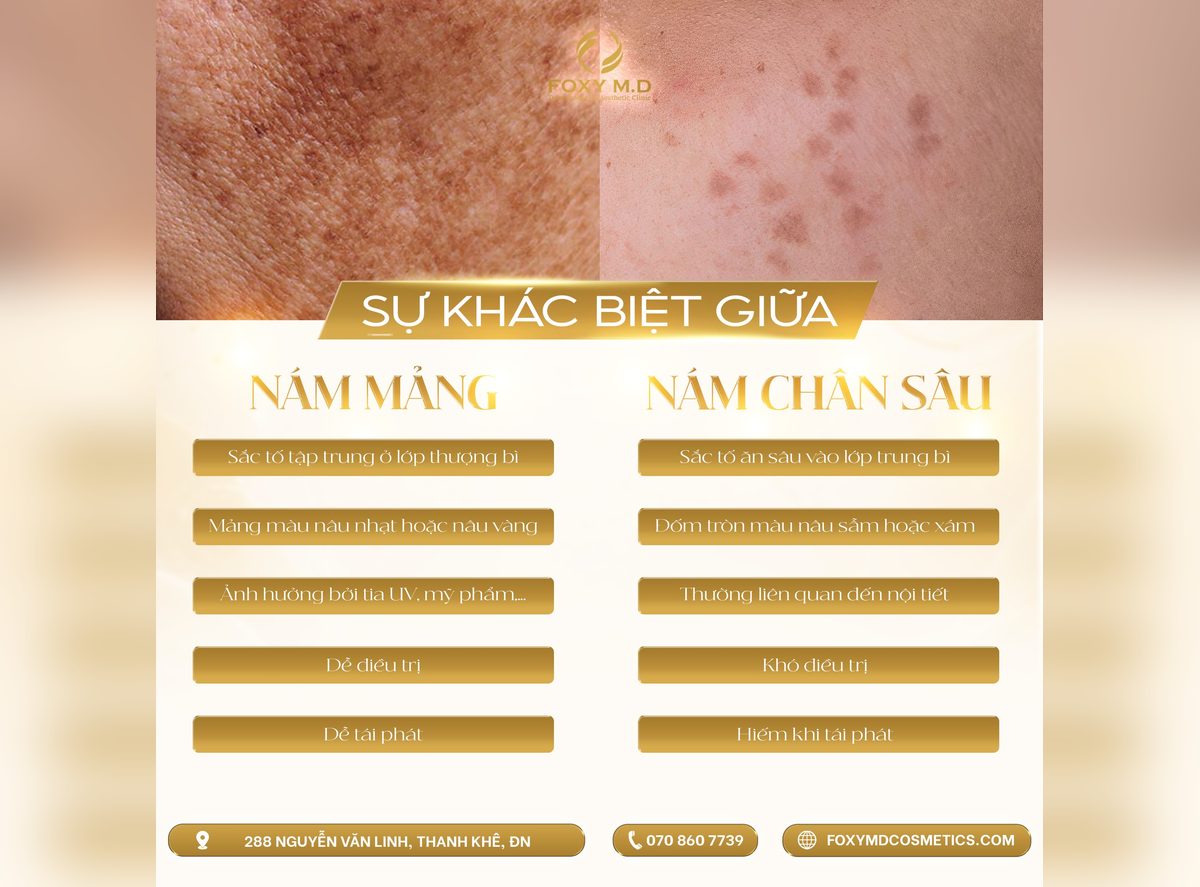
- Using cream on deep melasma: creams mainly act on the epidermis, so deep melasma barely changes, while the surrounding skin may brighten, making the melasma patch look more visible.
If you are not sure which type of melasma you have, read our article on how to tell epidermal melasma from deep melasma.
5 Who can rely on cream at home, and who should get treatment at a clinic?
Applying cream at home suits shallow, recently appeared melasma on healthy skin. People with deep melasma, mixed melasma, skin previously exposed to mixed creams, those who are pregnant, or those who have used cream for a long time without improvement should see a doctor for a combined treatment plan.
You can start with cream and sunscreen if:
- The melasma patches are light brown, small in area and recent.
- Your skin is not sensitive and you have never used mixed creams.
- You can keep up with daily sunscreen.
See a doctor before self-treating if:
- The melasma is dark brown or grayish, spreading, or has not improved after more than 3 months of cream.
- You are pregnant or breastfeeding: many actives are not suitable during this time.
- Your skin is red, thin and stings because of past mixed-cream use.
- You have another skin condition at the same time, such as eczema, contact dermatitis or inflamed acne.
For deep melasma, the doctor may combine topical cream with Pico Allux-Q laser, Chrome laser (an Nd:YAG laser used to treat pigmentation), brightening mesotherapy injections or a brightening peel. Treatment plan details are in our article on medical-standard melasma treatment in Da Nang.
6 Cost of melasma consultation and treatment at Foxy M.D
According to the menu effective from 10/03/2026: dermatology consultation from $4, Pico laser from $43/session, brightening peel from $33, brightening mesotherapy injection from $83. Take-home products and Chrome laser are as prescribed by the doctor.
One consultation usually costs far less than buying several creams and giving up on them. After a skin analysis, the doctor will tell you whether your melasma needs in-clinic treatment or simply a change in how you apply your products, so you can choose an approach that fits your budget.
| Services | Cost per menu | When doctors usually consider it |
|---|---|---|
| Dermatology consultation | From $4 | Long-term cream use without improvement, irritated skin |
| Brightening peel | From $33 | Superficial pigmentation, dull skin |
| Laser Pico | From $43/session | Epidermal melasma, mixed melasma, freckles |
| Brightening mesotherapy injection | From $83 | Deep melasma, dull skin tone |
| Remee Pro 9 mesotherapy injection device | From $12 | People who are afraid of pain, sensitive skin |
| Chrome laser, topical products | As prescribed by the doctor | Depends on the pigmentation condition |
7 Why choose Foxy M.D in Da Nang for melasma treatment?
Foxy M.D dermatologists analyze your skin to identify the type of melasma, review the products you are using and adjust your skincare routine, and only then combine laser, mesotherapy or peels when needed.
If cream never seems to clear your melasma, it is usually not because you lack patience, but because the type of melasma or the way you use the product is not right. At Foxy M.D:
- A dermatology specialist examines you in person and asks in detail about the products you are using.
- Laser systems for pigmentation such as Pico Allux-Q laser and Chrome laser, together with brightening mesotherapy and peels.
- Service prices are listed on the menu and quoted before treatment.
- Guidance on your morning and evening routine, with follow-up visits to adjust it.
See more services on our in-depth treatments page.
8 Conclusion
Applying melasma cream correctly means applying a thin layer to clean, dry skin, in the right order, one treatment product at a time, and always using sunscreen. Stinging or darker skin is a signal to stop and see a doctor.
If you have used cream for months and your melasma has not faded, book an appointment so a Foxy M.D doctor can analyze your skin, review your routine and advise a suitable treatment approach. Hotline: 070 860 7739 – 093 157 1185. Address: 288 Nguyen Van Linh, Thanh Khe, Da Nang.
9 Quick summary of this article
- Applying melasma cream correctly: clean, dry skin, a thin layer, gradually increasing frequency, and always sunscreen during the day.
- The general order is thin before thick; for prescription treatment products, follow your doctor's instructions.
- Lasting stinging, redness and peeling patches mean irritation: stop the product, soothe the skin and see a doctor if it does not improve.
- Darker skin is usually due to post-inflammatory hyperpigmentation, lack of sunscreen, mixed creams or deep melasma that does not respond to cream.
- Deep melasma and mixed melasma should be treated with a combination of laser, mesotherapy and peels as prescribed by a doctor.
10 Frequently asked questions
1. Is it a problem if my skin gets darker after using melasma cream?
It is a sign worth paying attention to. Darker skin is usually caused by irritation that triggers post-inflammatory hyperpigmentation, by not using sunscreen, or by a cream containing unsuitable ingredients. You should stop the product, switch to gentle care, protect your skin from the sun carefully and see a dermatologist for an assessment, rather than switching to a stronger cream on your own.
2. Should I keep using melasma cream if it stings?
Mild tingling for a few minutes that then fades can happen with some active ingredients. But if the burning lasts, or you get redness, swelling, peeling patches or itching, you should stop. Continuing to apply it on inflamed skin can easily make melasma darker. If there is no improvement after 2–3 days of gentle care, please see a doctor.
3. Should I apply melasma cream or serum first?
Usually serum goes on first because it is thin and absorbs quickly, followed by the cream. However, for prescription treatment products, the doctor may ask you to apply them directly to clean skin first. If both your serum and cream contain strong actives, it is wiser to split them between morning and evening to limit irritation.
4. How long does melasma cream take to work?
Melasma cream usually needs about 8 to 12 weeks of consistent use before the melasma fades noticeably, provided you use good sun protection. If there is no improvement after about 3 months, the melasma may be deep or your routine may not be suitable. At that point, see a doctor so they can consider combining in-clinic treatments.
5. Should I buy prescription-strength melasma cream on my own?
You should not buy strong treatment products or mixed creams of unknown origin on your own. Some strong whitening actives and corticosteroids, when used incorrectly, can thin the skin, cause visible blood vessels and lead to skin discoloration that is hard to reverse. See a dermatologist to get the right product, dosage and follow-up schedule.
6. Can I have laser treatment while using melasma cream?
Yes, but you usually need to pause some treatment products for a few days before and after the laser so the skin does not get irritated. The doctor will check what you are using, assess your skin and give you a specific schedule for stopping and restarting. Do not reapply strong products right after laser on your own.
Article edited from a post dated 02/10/2026 on the Foxy M.D Fanpage.