What Is the Chrome Lase Station? A 6-Handpiece Multi-Purpose Laser System and What Each Handpiece Treats
- 1What is the Chrome Lase Station?
- 2Which handpieces does the Chrome Lase Station have, and what does each one treat?
- 3How is the Chrome Lase Station different from Pico laser and Fractional CO2?
- 4Who should and shouldn't be treated with the Chrome Lase Station?
- 5What happens during a Chrome laser session, and what should you keep in mind?
- 6How much does the Chrome Lase Station laser cost?
- 7Why choose Chrome Lase Station treatment at Foxy M.D Da Nang?
- 8Conclusion
- 9Quick summary of this article
- 10Frequently asked questions

1 What is the Chrome Lase Station?
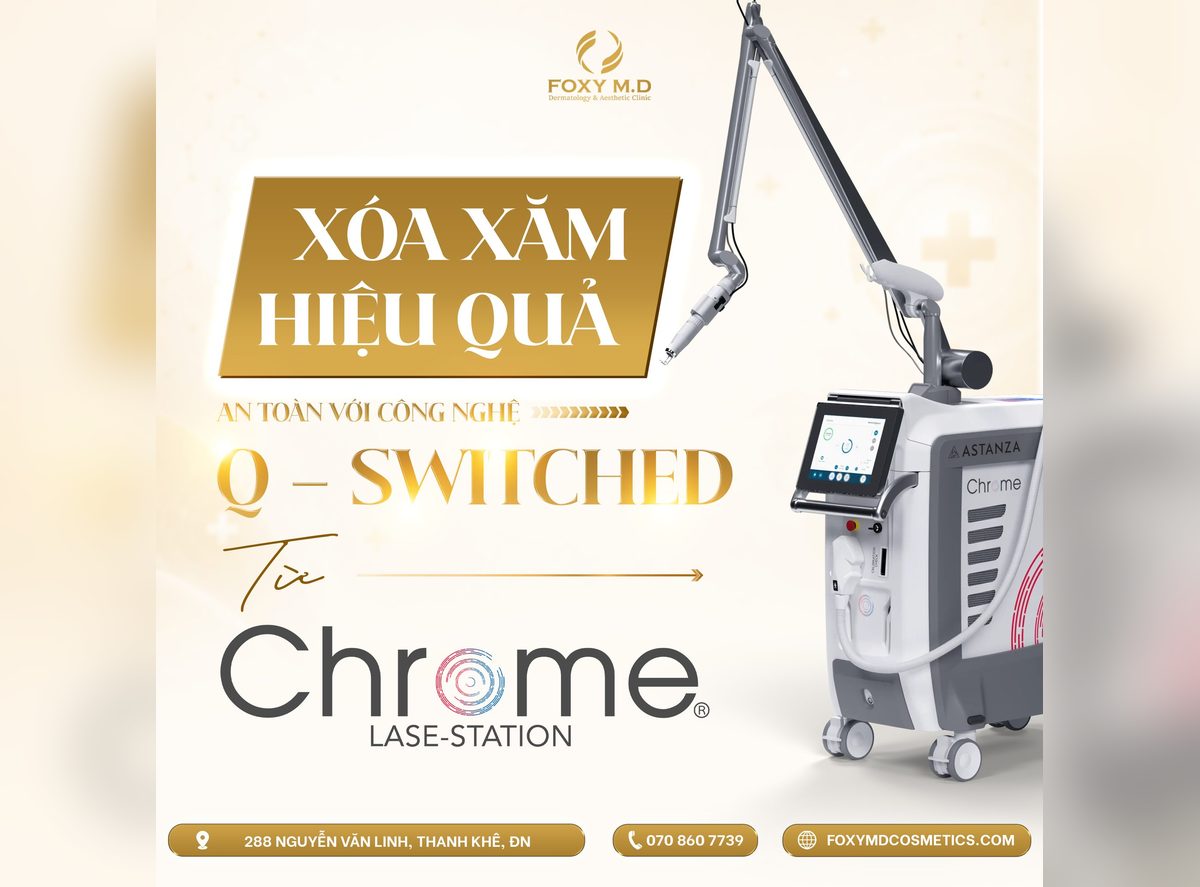
The Chrome Lase Station is a multi-purpose laser system by Quanta System (Italy): one main unit that accepts several handpieces with different wavelengths, so the doctor can choose the right tool for scars, pigmentation, blood vessels, tattoos and skin rejuvenation.
Each skin concern absorbs light in its own way. The melanin in melasma and freckles "prefers" a different wavelength from the hemoglobin in blood vessels, while atrophic scars need energy that acts on the water in the tissue. That is why a single laser usually does only a few things well. The Chrome Lase Station solves this by bringing several energy sources together on one platform: the 2940 nm Er:YAG laser, the 694 nm Ruby laser, zoom and fractional Q-Switched handpieces, laser peel and pulsed light.
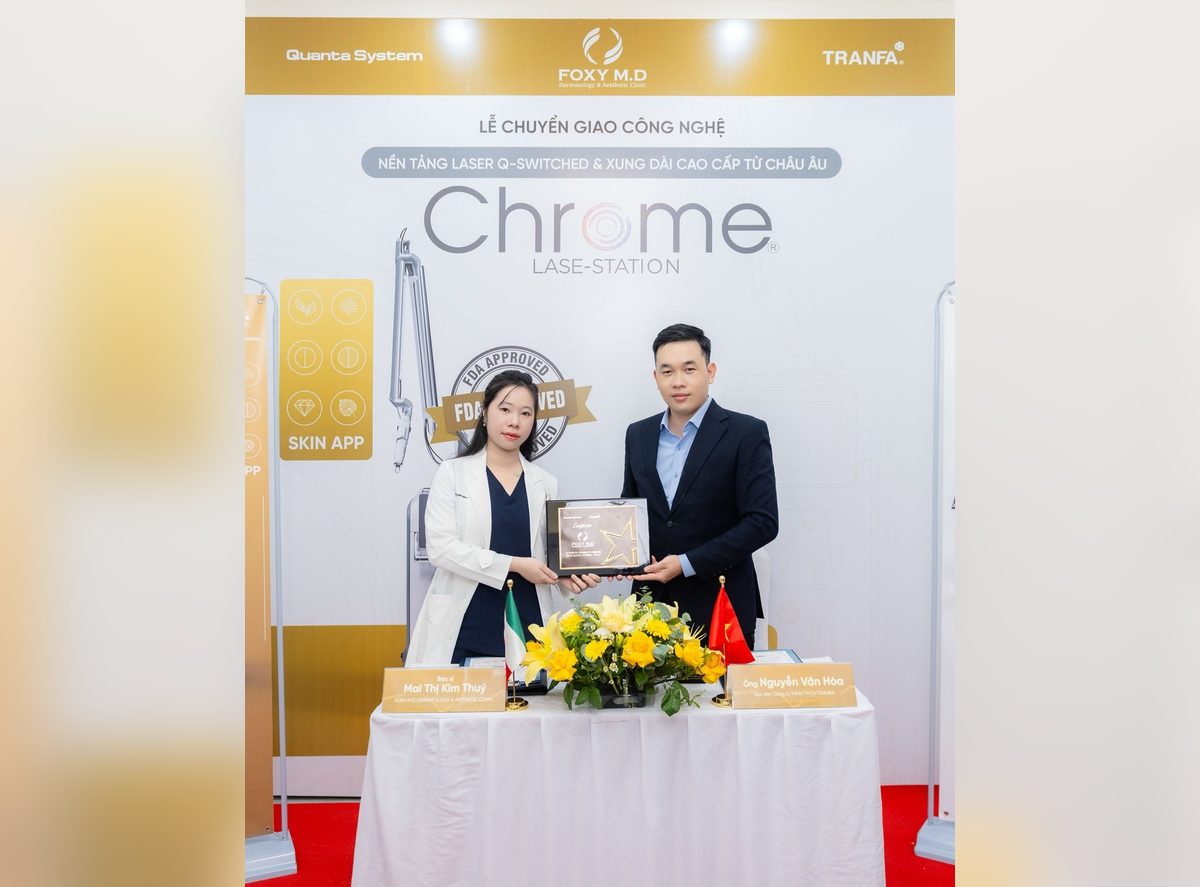
Foxy M.D received this system through a technology transfer from Quanta System via the distributor TRANFA in September 2026 (see the technology transfer news). The benefit for patients is that the doctor can combine several wavelengths in the same treatment plan instead of switching between many different devices. Chrome is part of the clinic's advanced laser services.

2 Which handpieces does the Chrome Lase Station have, and what does each one treat?
According to the Foxy M.D fanpage, the Chrome system has 6 handpieces: Twain 2940 (Er:YAG) for scars; OptiZoom and OptiBeam II for pigmentation, blood vessels and tattoos; Rosso (Ruby 694 nm) for melasma, freckles and tattoos; NaturaPeel for pores; and Twain IPL for rejuvenation.
The table below summarizes the applications printed on the poster for each handpiece shared by Foxy M.D. These are the general applications of the device; which handpiece suits you is decided by the doctor after examining your skin.


| Handpiece | Technology | Main applications |
|---|---|---|
| Twain 2940 | Ablative Er:YAG 2940 nm laser | Acne scars, post-injury scars, micro-point ablation, skin resurfacing |
| OptiZoom | Flexible zoom handpiece with precise spot-size adjustment | Skin rejuvenation, benign vascular lesions, melasma, freckles, pigmentation, colored tattoo removal |
| Rosso | Laser Ruby 694 nm | Melasma, freckles, benign pigmentation, tattoo removal |
| OptiBeam II | PlasmaFrax and PhotoFrax fractional handpiece (8DF and 9HC tips) | Benign pigmentation, skin resurfacing, tattoo removal, skin rejuvenation |
| NaturaPeel | Laser peel combined with a specialized cream | Smoothing, skin resurfacing, pore refinement, collagen stimulation |
| Twain IPL | Intense pulsed light | Skin rejuvenation, improvement of superficial pigmentation |
3 How is the Chrome Lase Station different from Pico laser and Fractional CO2?
Pico laser and Fractional CO2 each excel at one group of tasks: Pico for pigmentation and tattoos, CO2 for atrophic scars. Chrome is a multi-handpiece platform that covers both scars and pigmentation, which makes it convenient when several wavelengths need to be combined.
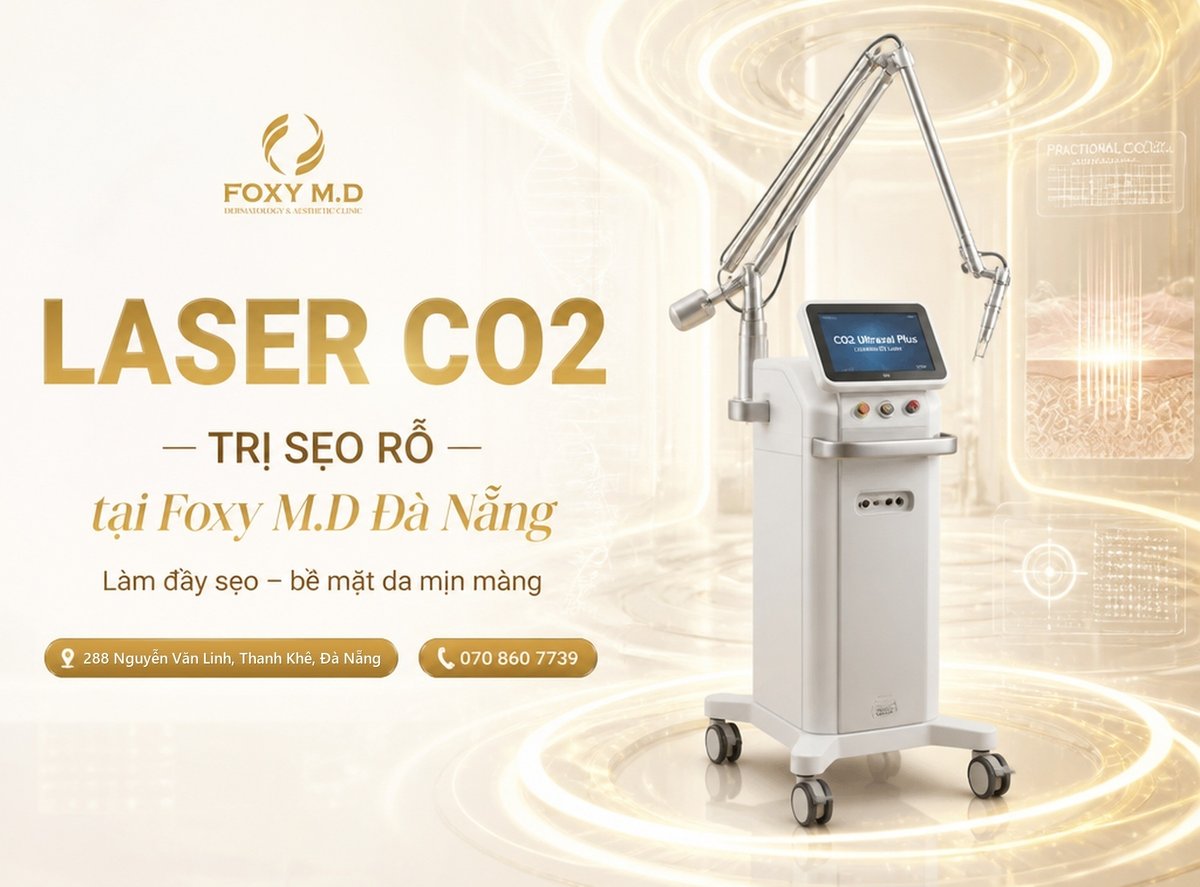
Foxy M.D currently offers all three options: Pico Allux-Q laser for melasma and freckles, Fractional CO2 laser for atrophic scars and the Chrome Lase Station. Having several devices does not mean one is better than another; what matters is choosing the right tool for the right lesion and the right skin type.
| Criteria | Chrome Lase Station | Laser Pico Allux-Q | Fractional CO2 |
|---|---|---|---|
| Device type | Multi-handpiece, multi-wavelength platform | Picosecond pulse laser | 10,600 nm fractional ablative laser |
| Strengths | Combines scars, pigmentation, blood vessels and tattoos in one treatment plan | Melasma, freckles, tattoo removal | Atrophic scars, resurfacing |
| Recovery time | Depends on the handpiece: from immediate return to daily activities to a few days of scabbing | Usually mild redness for a few hours to 1–2 days | Usually redness and scabbing for 5–7 days |
| Price at Foxy M.D | As prescribed by the doctor | From $43/session | From $83/session |
4 Who should and shouldn't be treated with the Chrome Lase Station?
Chrome suits people with acne scars, post-injury scars, freckles, benign pigmentation, tattoos they want removed, or dull skin and enlarged pores. It should not be done during pregnancy, when the treatment area is inflamed or infected, or right after heavy sun tanning.
For melasma, the doctor needs to distinguish between superficial (patchy) melasma and deep melasma before deciding whether to use a laser, because melasma tends to recur and is sensitive to heat (read more: how to tell superficial melasma from deep melasma). If you are taking the acne medication isotretinoin or drugs that increase light sensitivity, or have an active skin condition, tell the doctor during your examination.
Worth considering
Atrophic scars, post-injury scars, freckles, brown spots, benign pigmentation, tattoos you want removed, rough skin, enlarged pores, benign vascular lesions.
Needs a careful examination first
Long-standing melasma, darker skin, a history of post-inflammatory hyperpigmentation, skin currently using strong active products such as retinoids.
Postpone
Pregnancy, open wounds in the treatment area, severe inflamed acne, an active herpes outbreak.
Not suitable
Undiagnosed lesions suspected to be malignant; people who cannot follow sun protection and post-laser care.
5 What happens during a Chrome laser session, and what should you keep in mind?
A session includes a skin examination, choosing the handpiece, cleansing and numbing if needed, the laser treatment itself, then soothing the skin. After laser treatment you need strict sun protection, should not pick at scabs, and should pause strong active ingredients as instructed by the doctor.
How it feels depends on the handpiece: laser peel and pulsed light usually feel only warm with a light prickling; the ablative Er:YAG or the Ruby tattoo-removal handpiece feels like a rubber band snapping against the skin, so numbing is usually applied first. Note: lasers that treat pigmentation carry a risk of post-inflammatory hyperpigmentation if the skin is exposed to the sun too soon, so home care is just as important as the treatment session.
Examination and skin analysis
The doctor assesses the type of lesion, its depth and your skin type to choose the handpiece and energy level.
Cleansing and numbing
The skin is cleansed; numbing cream is applied for 30–45 minutes for ablative or tattoo-removal handpieces.
Laser treatment
The doctor follows the treatment plan and may combine several handpieces in one session.
Soothing and aftercare advice
A soothing mask, recovery cream and sunscreen are applied, and a follow-up appointment is scheduled.
6 How much does the Chrome Lase Station laser cost?
The Chrome Lase Station laser does not yet have a listed price in Foxy M.D's menu effective March 10, 2026. The cost depends on the handpiece, the treatment area and the number of sessions, so it is quoted based on the doctor's recommendation after the examination.
A Chrome treatment plan may use just one handpiece, or combine two or three handpieces on different areas, so it is hard to give a single price. To give you a sense of the general cost level, below are some other laser and resurfacing services that do have prices on the Foxy M.D menu. These are the prices of those services, not Chrome prices.
- Pico laser: from $43/session.
- Fractional CO2: from $83/session; Laser Fractional in the scar treatment menu: from $41.
- Tattoo removal: from $21 for small tattoos; larger tattoos are priced by size.
- Brightening peel: from $33.
7 Why choose Chrome Lase Station treatment at Foxy M.D Da Nang?
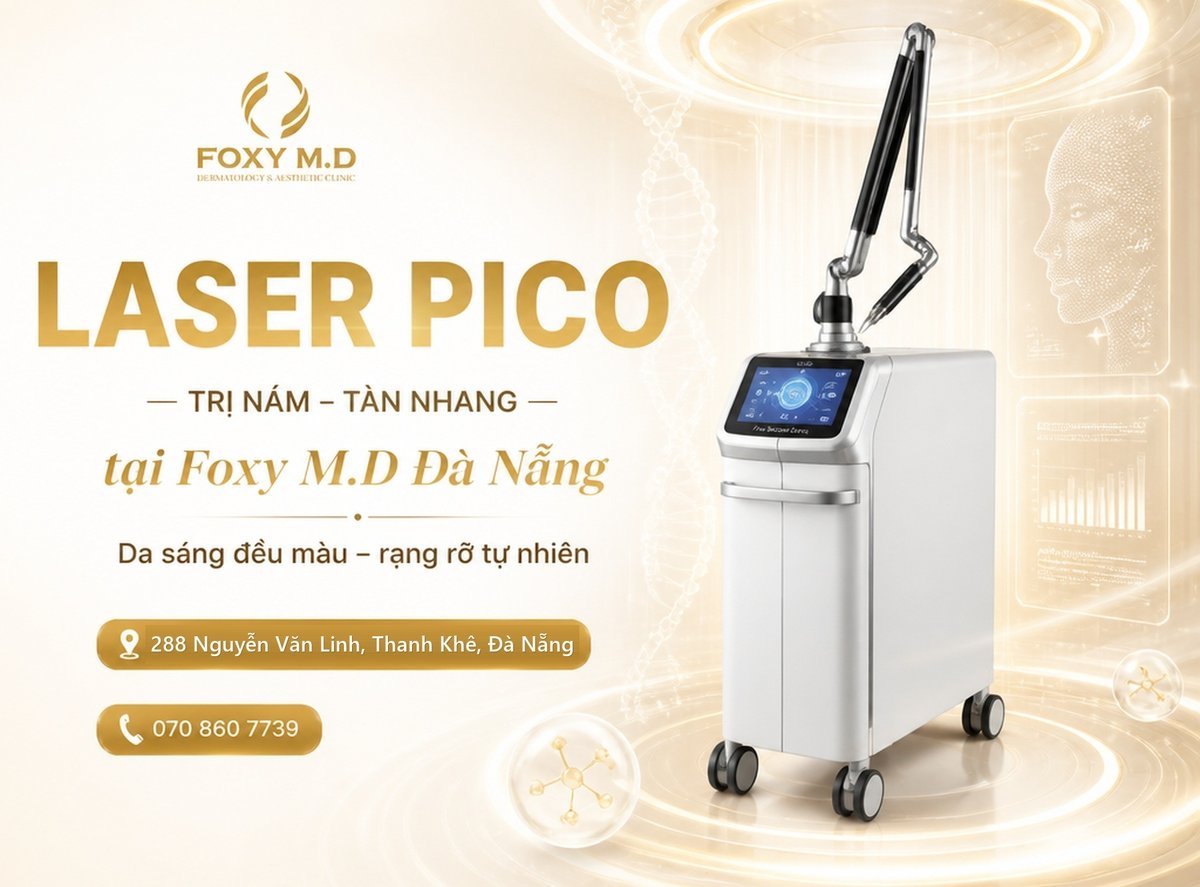
Foxy M.D owns a genuine Chrome Lase Station by Quanta System, with technology transfer and technical training provided by TRANFA, and also has the Pico Allux-Q laser and Fractional CO2 available so the doctor can combine them or choose a more suitable option.
The advantage of a clinic with several technologies is that the doctor is not forced to use one device for every problem. For example, long-standing atrophic scars may need laser combined with Subcision scar release; multi-colored tattoos may need the Ruby handpiece combined with Pico laser, as discussed in the article Q-Switched or Pico for tattoo removal.
Genuine equipment
Certificate of equipment ownership and certificate of technology transfer from Quanta System, Italy.
Examined in person by a dermatologist
The type of lesion is diagnosed first, then the handpiece and energy are chosen.
Multiple technology options
Chrome, Pico Allux-Q, Fractional CO2, RF Needle, peels and restorative injections all in the same clinic.
Post-treatment follow-up
Follow-up appointments and care instructions to reduce the risk of post-inflammatory hyperpigmentation.
8 Conclusion
The Chrome Lase Station is a multi-purpose laser system that helps the doctor choose the right wavelength for scars, pigmentation, tattoos and rejuvenation. Effectiveness depends on an accurate diagnosis, a suitable treatment plan and post-laser care; results vary from person to person.
If you are unsure whether to choose Chrome, Pico or CO2, the quickest way is to let the doctor analyze your skin and advise you in person. You can book an examination at Foxy M.D, 288 Nguyen Van Linh, Thanh Khe, Da Nang, or call the hotline 070 860 7739 – 093 157 1185.
Read more: What Is the Er:YAG 2940 Laser? Compared With CO2 Fractional · What Is a Ruby Laser? Ruby 694nm vs. Nd:YAG and Pico · What Is a Laser Peel? How It Differs From Carbon Peel and Chemical Peel · Laser Treatment for Facial Spider Veins: Mechanism, Sessions, Price
9 Quick summary of this article
- The Chrome Lase Station is a multi-purpose laser system by Quanta System (Italy), available at Foxy M.D since September 2026.
- 6 handpieces: Twain 2940 (Er:YAG), OptiZoom, Rosso (Ruby 694 nm), OptiBeam II, NaturaPeel, Twain IPL.
- Applications: acne scars, post-injury scars, melasma, freckles, benign pigmentation, blood vessels, tattoo removal, rejuvenation, pores.
- Not yet priced on the menu; the cost follows the doctor's recommendation after the examination.
- Effectiveness depends on an accurate diagnosis and post-laser care; results vary from person to person.
10 Frequently asked questions
1. Is the Chrome Lase Station a Pico laser?
No. The Chrome Lase Station is a multi-handpiece platform by Quanta System that includes Er:YAG, Ruby, Q-Switched handpieces and pulsed light. A Pico laser fires even shorter pulses, in the picosecond range, and at Foxy M.D it is a separate device: the Pico Allux-Q. The doctor may use each device on its own or combine both, depending on the lesion.
2. Does Chrome laser treatment hurt?
The level of discomfort depends on the handpiece. Laser peel and pulsed light usually feel only warm with a light prickling. The ablative Er:YAG handpiece or the Ruby handpiece for tattoo removal feels like a rubber band snapping against the skin, so the doctor usually applies numbing cream for 30–45 minutes beforehand to keep you comfortable.
3. How long does it take to see results from Chrome laser treatment?
It depends on the treatment goal. Brighter, smoother skin after a laser peel may be visible within a few days. Atrophic scars need time for new collagen to form and usually improve noticeably after several sessions spaced 4–6 weeks apart. Pigmentation and tattoos fade gradually with each session. The exact number of sessions is set by the doctor after the examination.
4. Is there any downtime after Chrome laser treatment?
It depends on the handpiece. After a laser peel or IPL you can usually go straight back to work, with mild redness for a few hours. The Er:YAG handpiece for scars or the Ruby handpiece for tattoo removal may cause redness, mild swelling and scabbing for a few days. During this time you need careful sun protection, should not pick at scabs, and should use recovery products as instructed.
5. How much does the Chrome Lase Station laser cost?
Foxy M.D's price menu, effective March 10, 2026, does not yet list a price for the Chrome laser. The cost depends on the handpiece chosen, the size of the treatment area and the number of sessions in the treatment plan, so the clinic provides a quote after the doctor's examination. You can book an appointment for specific advice.
6. Can the Chrome laser treat melasma?
Some handpieces, such as OptiZoom and Rosso, are used for melasma, freckles and pigmentation. However, melasma tends to recur and is sensitive to heat, so the doctor needs to identify the type of melasma, its depth and your skin type before deciding. Laser is usually one part of the treatment plan, along with sun protection and suitable topical medication.
Article adapted from a post dated September 24, 2026 on the Foxy M.D Fanpage.